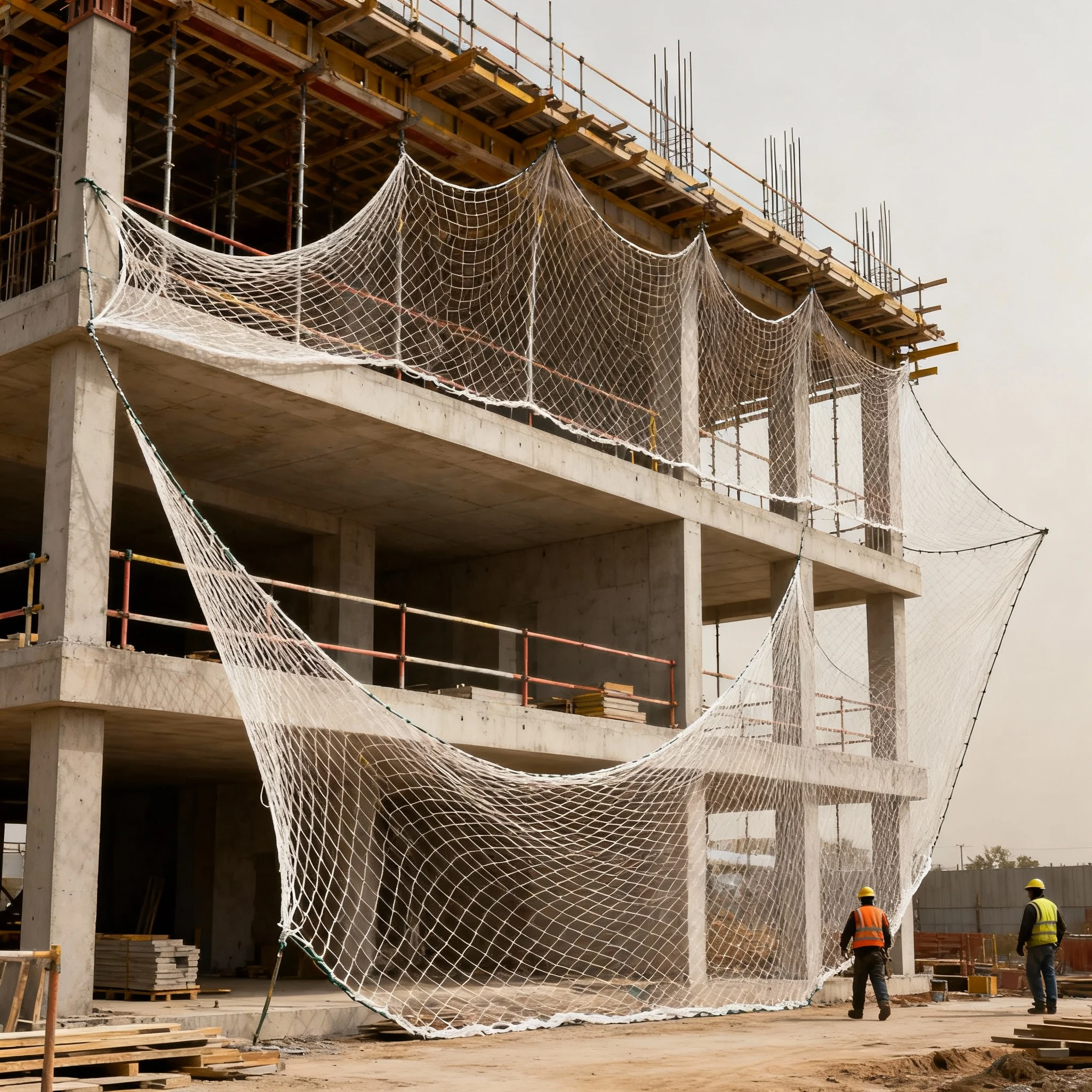
Project-specific fall and debris controls

Construction Safety Nets in Bangalore for Active Worksites

Construction safety nets may be used as part of a project-specific fall, falling-object or debris-control system. The purpose, applicable site requirements, net specification, supporting structure, clearance, access and inspection plan must be defined by the responsible project team and reviewed by competent personnel before use.

Business enquiries are open 24 hours, every day.
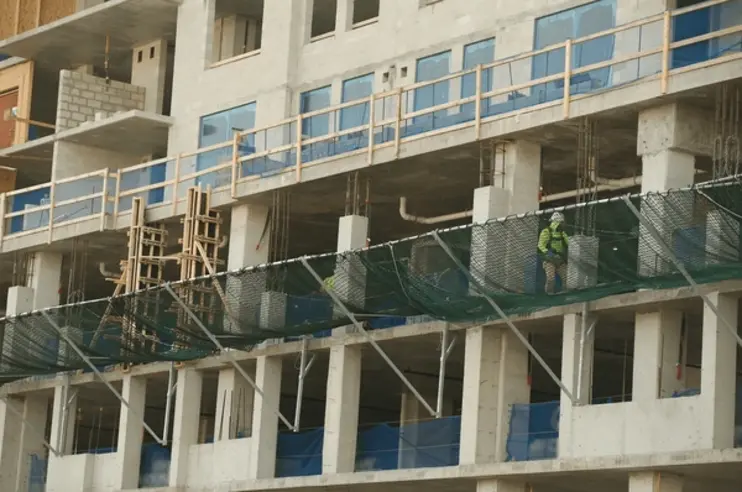
Construction safety net system installed around an active building project in Bengaluru

Site details before installation

Construction netting is safety-critical work and cannot be selected from a residential mesh description or price alone.

Quick answer

Construction Safety Nets at a glance

First requirement
Define whether the system addresses personnel falls, falling objects, debris or facade containment.
Who must confirm
The project authority and competent safety or engineering personnel for the actual site.
Quote method
Approved drawings, specification, quantities, supports, access, testing and inspection scope.

Safety-critical planning

Different construction nets solve different risks

A fall-arrest net, falling-object catch net, scaffold debris mesh and facade covering are not interchangeable. Each has different load, mesh, clearance, attachment, overlap and inspection requirements.

The principal contractor or responsible project team should provide the intended system, drawings, performance requirements, applicable standards and safe method of work. Supporting structures and anchorage must be capable of receiving the planned loads.

Netting does not remove the need for compliant guardrails, personal fall protection, exclusion zones, housekeeping or other controls required by the project. Installation, relocation, repair and inspection should be controlled and recorded.

Service gallery
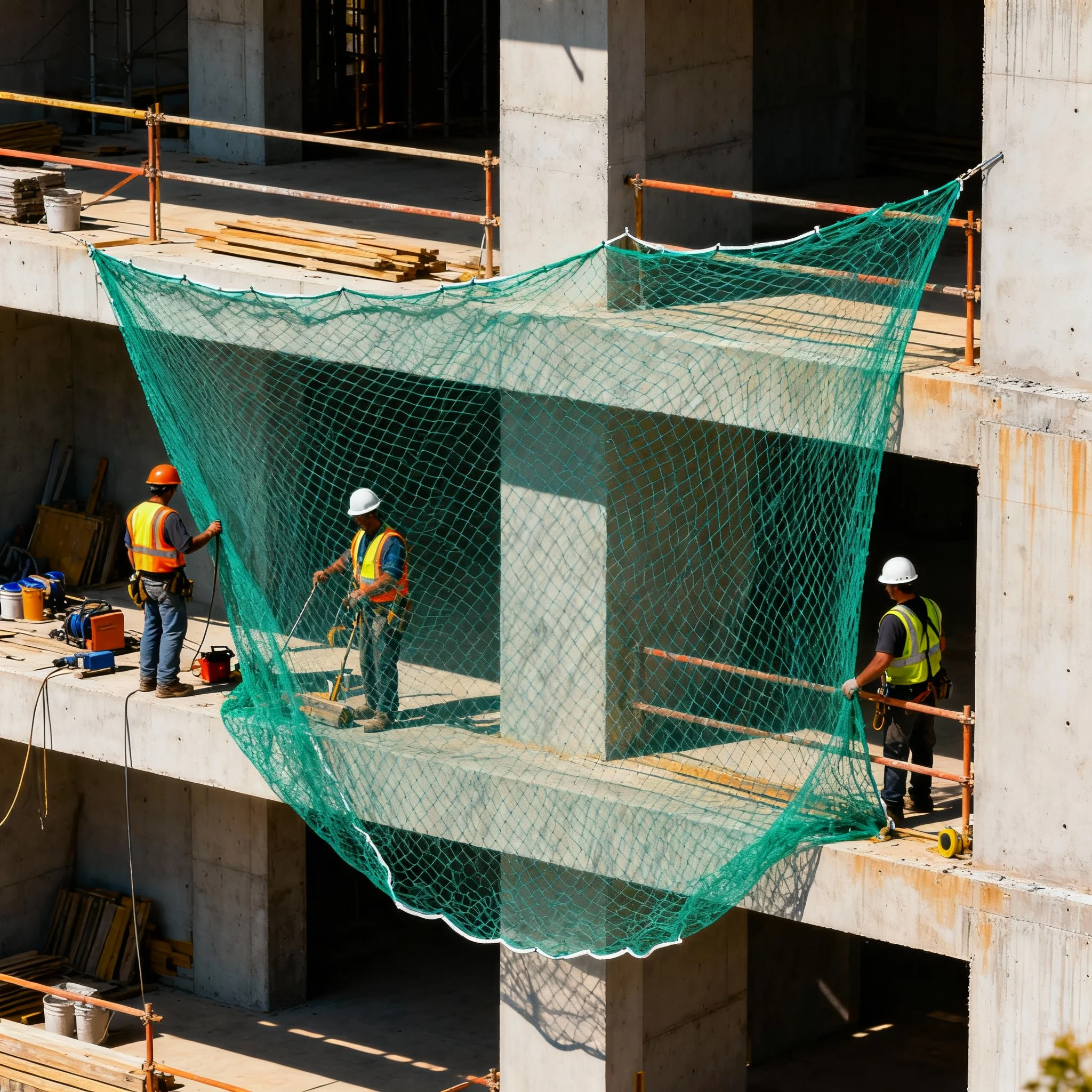
Green perimeter safety netting across an active building structure
Protective netting around the outer levels of a building under construction

Common applications

Construction net applications to distinguish

The project scope must name the hazard and system purpose at each location.

Fall-arrest net systems

Engineered and approved systems intended to reduce consequences of a fall where permitted by the site plan.

Falling-object catch nets

Horizontal or angled systems planned around object size, drop path, clearance and exclusion zones.

Scaffold debris mesh

Facade or scaffold covering intended to limit smaller debris and dust migration, subject to wind loading.

Temporary opening protection

Selected floor, shaft or edge openings covered only under an approved temporary-works and inspection plan.

Commercial comparison

Construction net specification: what the project must confirm

Do not approve safety-critical netting without documented purpose, performance and responsibility.

  • Hazard

    Confirm in the quote
    Fall, object, debris, dust or access-control purpose
    Why it matters
    Different hazards require different systems and cannot share assumed performance.
  • Performance

    Confirm in the quote
    Approved net type, material, mesh, energy or load requirements and standards
    Why it matters
    Residential product descriptions are not evidence for construction use.
  • Support

    Confirm in the quote
    Anchors, frames, scaffold ties, edge ropes, overlaps and clearances
    Why it matters
    Loads transfer through the complete support and attachment arrangement.
  • Method

    Confirm in the quote
    Installation, rescue, removal, relocation and exclusion-zone plan
    Why it matters
    Workers can be exposed while the protective system is being installed or changed.
  • Control

    Confirm in the quote
    Competent inspection, testing, records, repair and replacement criteria
    Why it matters
    The system must remain controlled throughout changing site conditions.

Purchase intent

Construction safety net quotation: what changes the project cost

How the work is measured

Quantities follow approved drawings and net faces; support, access and testing are separate scope items.

A safe quotation needs more than area. System purpose, approved performance, temporary works, height, access, programme and inspection responsibilities materially affect cost.

  • Defined hazard and approved net system
  • Net area, mesh, borders and overlaps
  • Anchors, frames, scaffold ties and supports
  • Height, access and work-at-height method
  • Clearance, exclusion and rescue requirements
  • Installation stages, moves and programme
  • Testing, competent inspection and records
  • Repair, removal, disposal and handover scope
Send photos for an estimate

Choose the right service

Fall nets vs debris mesh and perimeter controls

  • Fall-arrest safety net

    Choose it when
    The approved project system uses a net to address personnel fall consequences.
    Consider before buying
    Performance, clearance, anchorage, rescue and competent inspection are safety-critical.
  • Falling-object catch net

    Choose it when
    The plan addresses objects dropping toward lower levels or public areas.
    Consider before buying
    Object size, energy, angle, clearance and exclusion zones must be defined.
  • Scaffold debris mesh

    Choose it when
    Smaller debris or dust migration around scaffold or facade work is the issue.
    Consider before buying
    It is not automatically fall-arrest and can add significant wind load.
  • Guardrails and exclusion controls

    Choose it when
    The risk is better prevented at the source or controlled by physical separation.
    Consider before buying
    Netting may complement but does not automatically replace required primary controls.

Service process

How a construction net scope should proceed

  1. 1

    Receive project requirements

    The responsible team provides hazard, drawings, specifications, programme and site rules.

  2. 2

    Review site and supports

    Access, anchors, clearances, changing work fronts and exclusions are checked with project personnel.

  3. 3

    Approve method and scope

    Materials, installation sequence, responsibilities, inspection and records are agreed before work.

  4. 4

    Install under control

    Work follows the approved method and is handed over only after required project inspection.

What properly planned construction nets can support

  • Add a defined control for approved fall or falling-object risks.
  • Contain selected debris around suitable scaffold or facade work.
  • Adapt to staged work fronts under a controlled method.
  • Provide inspectable temporary protection when specified correctly.

Critical limits

  • Construction nets must not be selected from residential claims or generic area rates.
  • They do not automatically replace guardrails, personal protection or exclusion zones.
  • Supporting structures, anchors and clearance require project approval.
  • Use must stop when inspection, damage or changing site conditions make the system uncertain.

Before you approve the work

Construction safety net procurement checklist

  • The hazard and system purpose are explicitly defined.
  • Approved drawings and performance requirements are available.
  • Net identification and supporting structure are specified.
  • Installation and rescue methods are approved.
  • Clearance and exclusion zones are maintained.
  • Competent inspection and test records are assigned.
  • Move, repair and replacement criteria are written.
  • No unverified compliance or load claim is accepted.

Local service

Construction safety net project enquiries across Bengaluru

We handle enquiries across Bengaluru. Send your neighbourhood and site photos so access and measurement can be discussed before a visit.

Frequently asked questions

Questions to answer before you book

What type of construction safety net do I need?

That depends on whether the project is controlling personnel falls, falling objects, debris or facade dust. The responsible project team and competent safety or engineering personnel must define the approved system.

Can balcony safety nets be used on construction sites?

Do not assume so. Residential mesh descriptions do not establish construction performance. Use only a project-approved net and complete support system for the defined hazard.

How is construction netting priced?

Pricing follows approved net quantities plus borders, overlaps, supports, anchors, height, access, installation stages, testing, inspection and removal. A square-foot net rate alone is incomplete.

Do construction nets replace guardrails or harness systems?

Not automatically. The site risk assessment and applicable requirements decide the hierarchy and combination of controls. Netting should not be used to remove another required control without approval.

Who inspects construction safety nets?

The project should appoint competent personnel and define inspection, testing, record and acceptance responsibilities. Checks are also needed after installation, relocation, impact, damage or relevant site change.

Can debris mesh catch a falling worker?

It should not be assumed. Debris mesh and fall-arrest nets have different purposes and performance requirements. Use only the approved system for the stated hazard.

What project information is needed before quotation?

Provide drawings, system purpose, specification, quantities, supporting structure, heights, access, programme, site rules and documentation requirements, along with the responsible safety or engineering contact.

Can you promise compliance from the service name alone?

No. Compliance depends on the applicable project requirements, documented materials, design, installation, inspection and ongoing control. These must be verified for the actual site.

Discuss a documented construction net scope

Send the project location, responsible contact, hazard description, drawings, specification, quantities, height, access, programme and required inspection or documentation. A residential photo-only quote is not sufficient for safety-critical work.

Open 24 hours, every day for enquiries.

CallWhatsAppFree quote