Window and balcony ledges
Narrow exterior sills and projections where birds land but do not enter through a large opening.
Landing deterrents for suitable surfaces
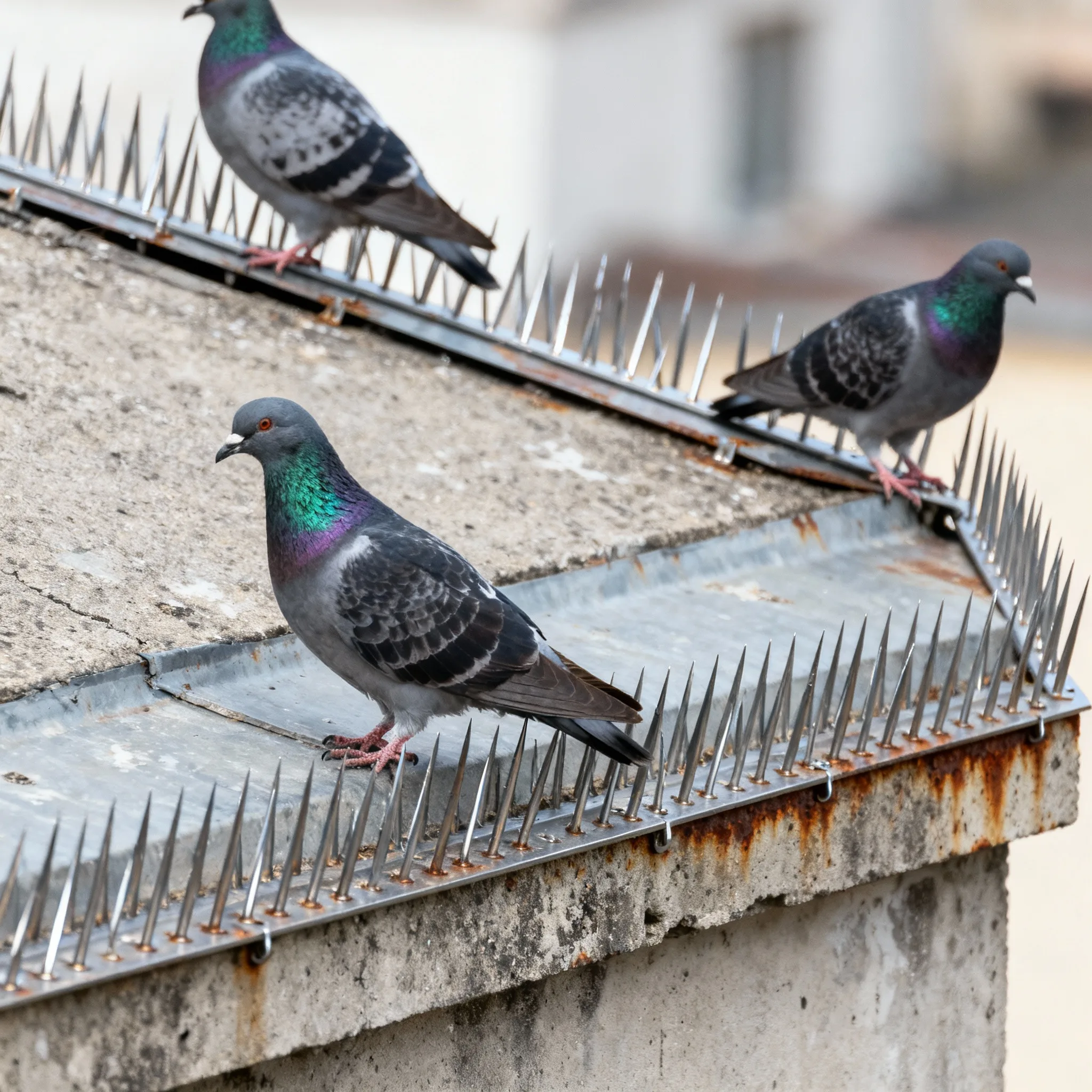
Bird spikes are physical landing deterrents fitted along suitable narrow surfaces such as ledges, parapets, signs and outdoor AC units. Servani Safety Nets checks the landing line, usable width, surface, drainage and access before recommending spike rows and a measured installation quote.
Business enquiries are open 24 hours, every day.
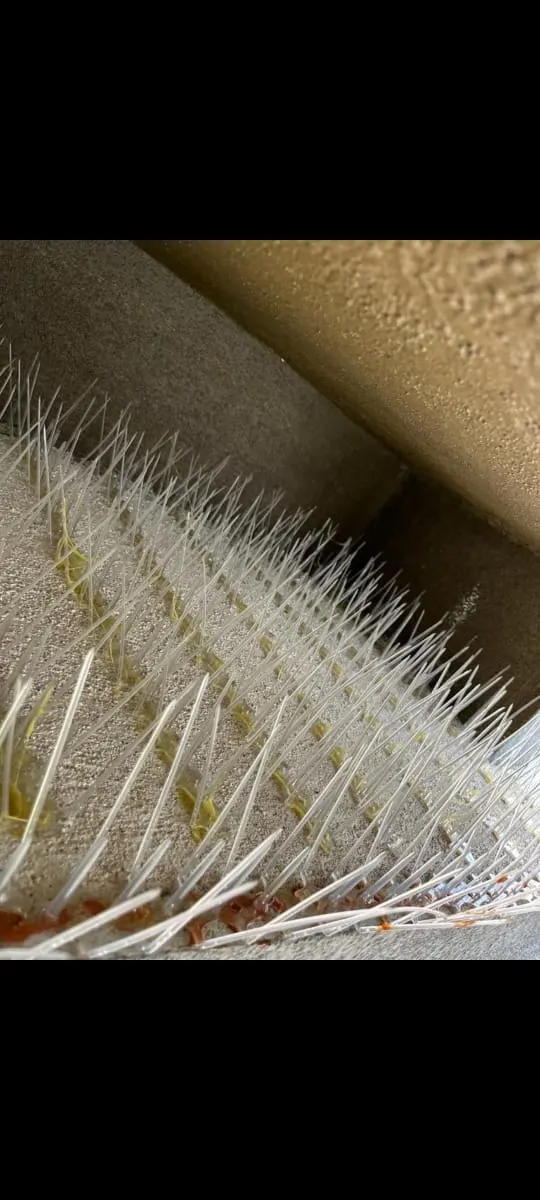
Site details before installation
Spikes address landing surfaces; they do not close a large opening that birds can fly through.
Quick answer
Choose the right bird control
Bird spikes make a narrow surface harder for pigeons and similar birds to land or settle on. They are commonly fixed along ledges, parapets, beams, signs, pipes and outdoor AC-unit tops after the usable landing width is checked.
A spike line only works where it covers the route birds use. Wide surfaces may need more than one row, while leaving a clear strip behind or beside the spikes can create another landing position. The base, pin arrangement, row spacing and fixing method should match the surface.
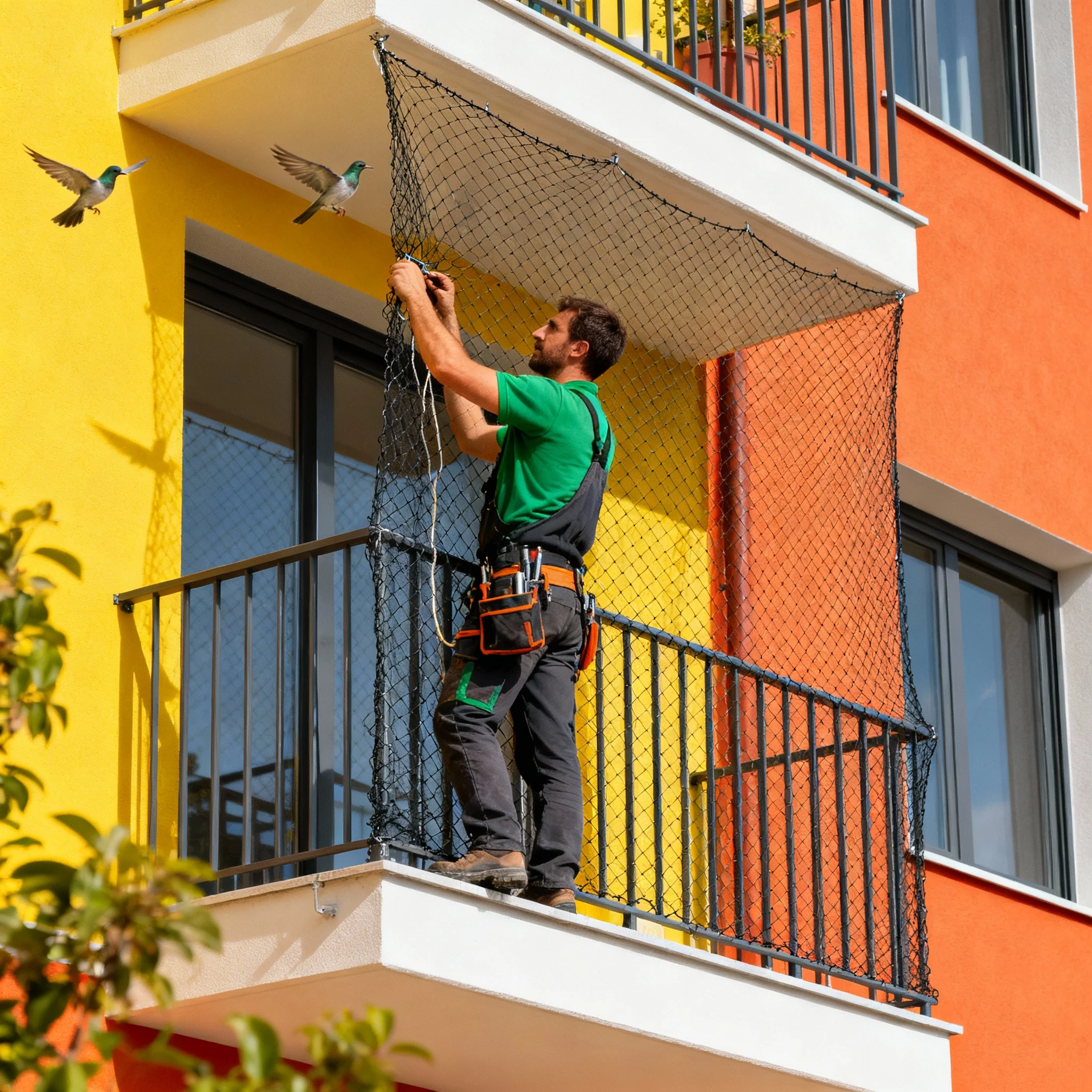
Spikes are not a full-opening barrier. If birds enter a balcony, window, utility or duct, pigeon netting is usually the relevant comparison. Cleaning alone may improve hygiene but does not remove the landing opportunity that attracts repeated use.
Service gallery
Common applications
The installer should follow the actual landing line and avoid blocking drainage or areas people routinely touch.
Narrow exterior sills and projections where birds land but do not enter through a large opening.
Suitable top surfaces and brackets while keeping service panels, airflow and drainage accessible.
Defined landing lines with a sound fixing surface and safe installation access.
Selected commercial or residential projections after checking width, public contact and maintenance.
Commercial comparison
A written quote should identify the spike system, covered landing line and surface preparation.
Purchase intent
How the work is measured
Running length x required rows for the landing width; cleaning and difficult access are listed separately.
Bird spikes are normally planned by the landing line rather than square feet of an open face. The ledge width decides whether one or more rows are needed, and the surface condition affects preparation and fixing.
Choose the right service
Service process
Send wide and close photos, approximate lengths, height and details of where birds sit most often.
We check landing width, nearby alternatives, fixing condition, drainage, access and service clearances.
Confirm the spike system, running length, row count, preparation, cleaning and included work.
The surface is prepared as agreed, spikes are aligned over the landing width and clearances are checked.
Before you approve the work
Local service
We handle enquiries across Bengaluru. Send your neighbourhood and site photos so access and measurement can be discussed before a visit.
Frequently asked questions
Price depends on running length, ledge width, number of rows, spike system, surface preparation, fixing method, height and access. Cleaning and removal of old nests or failed deterrents should be listed separately.
A correctly selected and installed system is designed to discourage landing rather than trap birds. It should cover the suitable surface, remain visible, avoid entanglement and be kept away from routine human contact.
They solve different problems. Spikes suit narrow landing surfaces; pigeon nets close large openings birds enter. Choose after identifying whether the problem is landing, entry or both.
Often yes on suitable surfaces, provided airflow, drainage, vibration, covers and technician access remain clear. The installation should not obstruct normal AC servicing.
The answer depends on the usable ledge width, spike spread and nearby landing space. A wide parapet may need multiple rows; a narrow sill may need one correctly centred row after measurement.
The method depends on the sound surface and approved work. Compatible adhesive or mechanical fixing may be used after preparation. Painted, dusty, damp, weak or uneven surfaces need special attention.
Yes. Check for debris, nests, loosened bases, bent sections, blocked drainage and uncovered landing strips. Cleaning frequency depends on the location and bird activity.
Send your Bengaluru location, wide and close photos, approximate running length and width of each ledge, installation height, surface type and where birds land. Mention cleaning, AC or window access needs.
Send your location, wide and close photos, approximate running lengths, ledge widths, installation height and where birds land. We will explain the likely rows, fixing and next measurement step.
Open 24 hours, every day for enquiries.