Balcony openings
Front and side faces near trees, ledges or roofs used as approach routes.
Measured barriers for suitable entry routes
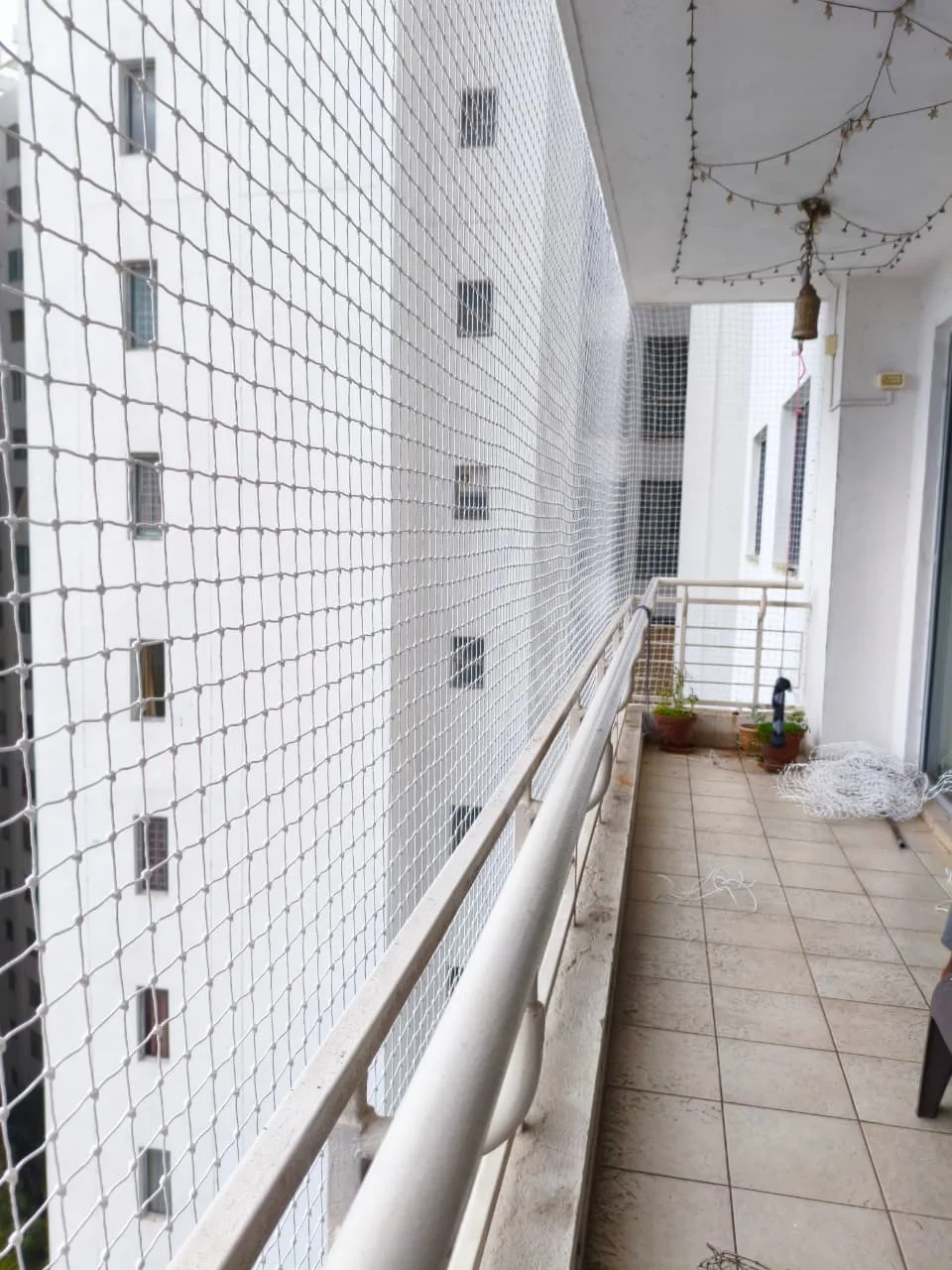
Monkey safety nets create a physical barrier across suitable openings used by monkeys to enter a property. Servani Safety Nets reviews the approach route, nearby trees or roofs, animal reach, mesh and border construction, anchors, service access and safe non-trapping closure before quotation.
Business enquiries are open 24 hours, every day.
Site details before installation
No mesh should be called completely monkey-proof without reviewing the animal route, strength, edges and nearby climbable access.
Quick answer
Map the route first
Monkeys may pull, climb, push at edges and use trees, parapets, pipes or neighbouring roofs to approach an opening. The whole route and reachable perimeter matter more than covering only the centre of a balcony face.
Mesh construction, border support, anchor spacing and fixing surfaces should be reviewed for the expected interaction. A light pigeon net or fine insect screen should not be assumed suitable for repeated animal contact.
The barrier should discourage entry without creating pockets that can trap wildlife. Food waste and attractants should be controlled, and residents should follow local wildlife guidance rather than approaching, feeding or attempting to handle animals.
Common applications
Coverage should follow known entry routes and every surface the animal can reach.
Front and side faces near trees, ledges or roofs used as approach routes.
Selected terrace-side gaps and stair-head openings with sound structural support.
Reachable openings planned around frames, pipes, AC access and exhausts.
Suitable building gaps where the route and fixing edges can be clearly defined.
Commercial comparison
Ask for a route-specific barrier scope, not a generic bird-net material description.
Purchase intent
How the work is measured
Every reachable opening face and return is measured; frames and difficult access are separate items.
Monkey-control work may require a different mesh, closer perimeter support and stronger fixing than ordinary bird entry netting. Route complexity and access can change the final scope.
Choose the right service
Service process
Send wide photos of trees, roofs and ledges plus close views of every opening and previous entry point.
Mesh needs, perimeter supports, anchors, gaps, access and non-trapping closure are reviewed.
Approve material, mesh, border, frame, measured faces, access sections and included work.
Coverage and fixings are checked and residents should observe whether another uncovered route remains.
Before you approve the work
Local service
We handle enquiries across Bengaluru. Send your neighbourhood and site photos so access and measurement can be discussed before a visit.
Frequently asked questions
No absolute claim is safe. A suitable barrier can close the measured route, but monkeys may test edges or use nearby trees, roofs, pipes and uncovered openings. Inspection and attractant control remain important.
Do not assume so. Monkey interaction may involve pulling, climbing and stronger contact. Mesh, borders, anchors and supports should be reviewed specifically for that route.
The quote depends on covered faces, material and mesh, border support, anchors, frames, route complexity, floor or roof access and controlled service sections.
They may suit balconies, terraces, windows and utilities with sound fixing paths. The approach route and every reachable adjacent gap must be reviewed before confirming suitability.
They may try. The system should be selected around climbing and pulling behaviour, but residents should still avoid interaction and arrange review if the mesh or edges are repeatedly stressed.
A correctly planned barrier should close entry without creating loose pockets or trapping an animal inside. Existing animals and active routes should be checked before final closure.
Inspect mesh, borders, anchors and corners after animal contact and regularly thereafter. Restrict access and arrange repair if you see cuts, stretching, loose supports or a new entry gap.
Send wide approach-route photos, close opening and edge photos, dimensions, floor level, known animal behaviour, nearby trees or roofs and all access that must remain usable.
Send your location, photos of trees, roofs and ledges around the property, every opening used or tested, approximate dimensions, floor level and required resident or service access.
Open 24 hours, every day for enquiries.