Residential pools
Regular shapes with a sound surrounding deck and a clear storage and removal routine.
A measured barrier within a layered pool-safety plan
Pool-net planning for the exact water edge, deck, anchor surface, daily removal routine and the other barriers and supervision your property uses.
Business enquiries are open 24 hours, every day.
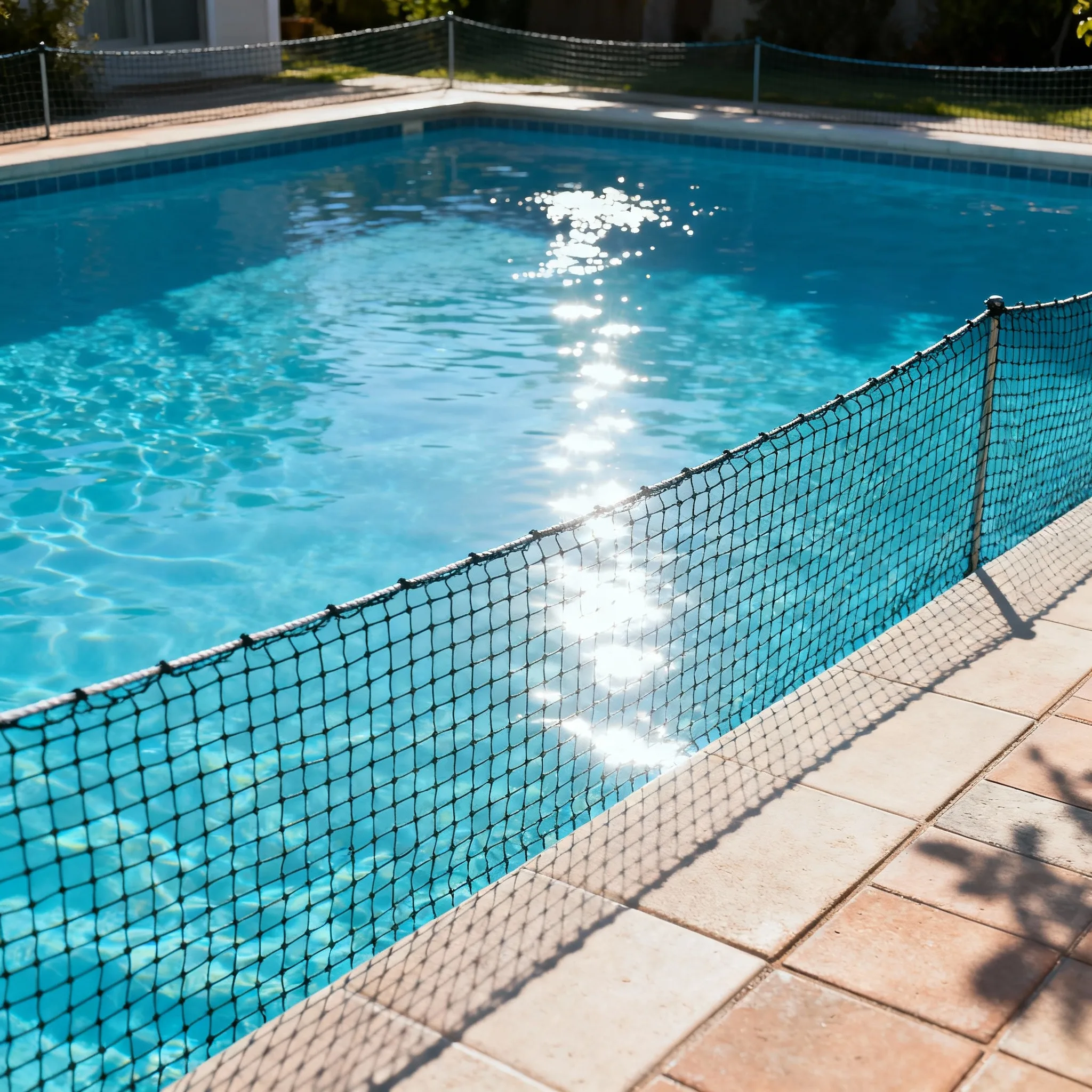
Site details before installation
A pool net is one layer only. It does not replace attentive adult supervision, compliant fencing, gates, alarms or local safety requirements.
Quick answer
Define the product before comparing prices
A swimming pool safety net spans the water opening and connects to anchors around the pool deck. Its geometry, attachment spacing, tension, openings and removal method must be planned for the exact pool rather than estimated from length and width alone.
Ask whether a proposed product is a debris cover, a safety net or another barrier, and what documented performance supports that description. Steps, curves, overflows, ladders and raised edges can complicate the boundary and leave gaps if not measured.
Pool safety relies on layers. Keep active adult supervision, controlled access, suitable fencing and gates, alarms or covers as applicable, emergency readiness and local compliance in place. Never assume a net makes a child drown-proof.
Common applications
The perimeter and use routine determine whether a net system is practical.
Regular shapes with a sound surrounding deck and a clear storage and removal routine.
Custom boundaries that require detailed templates, corner planning and gap control.
Openings where access equipment and changing water edges need separate detailing.
Only after responsible persons, operating procedures and applicable rules are confirmed.
Commercial comparison
Treat the net, anchors, tensioner and operating method as one system.
Purchase intent
How the work is measured
The pool waterline and full anchor perimeter should be measured, including every curve, step and obstruction.
Quotes vary with geometry, net system, connector count, deck drilling, access and documented performance. A simple square pool is different from a curved overflow pool of similar area.
Choose the right service
Service process
Identify users, pool access routes, existing fence, gate, alarms, supervision and local requirements.
Measure the water edge, curves, steps, fittings, deck material, joints, drainage and drilling limits.
Confirm intended use, net, anchors, connectors, removal tool, gaps and written scope.
Demonstrate correct tensioning, complete removal before use, storage, inspection and emergency access.
Before you approve the work
Local service
We handle enquiries across Bengaluru. Send your neighbourhood and site photos so access and measurement can be discussed before a visit.
Frequently asked questions
Price depends on measured water area, shape, steps, net system, anchors, deck material, obstacles and removal equipment. A site survey is normally needed for a complete scope.
Do not permit walking, sitting or playing on any pool net. Only rely on performance specifically documented for the complete selected system, while maintaining all other safety layers.
No. Access-controlled fencing and self-closing, self-latching gates may be required and remain an important layer. Check the rules that apply to your property.
No. A cover intended to catch leaves should not be treated as a safety barrier unless the complete product has documented safety performance for that use.
Often it can be custom measured, but curves, steps, ladders and overflow channels need detailed planning so openings and anchor positions remain controlled.
Drilling risk depends on deck construction, tile and stone joints, edge distance, services and waterproofing. These details must be inspected and approved before work.
The method depends on the selected connector and tension system. Responsible adults should be shown complete removal, safe storage and correct refitting after every use.
Use attentive adult supervision, controlled pool access, suitable fencing and gates, alarms or approved covers where applicable, rescue readiness and local safety guidance.
Send your location, full pool and deck photos, approximate waterline dimensions, pool shape, steps, ladders, overflow details, deck material, existing barriers and how the pool is opened and closed.
Open 24 hours, every day for enquiries.